
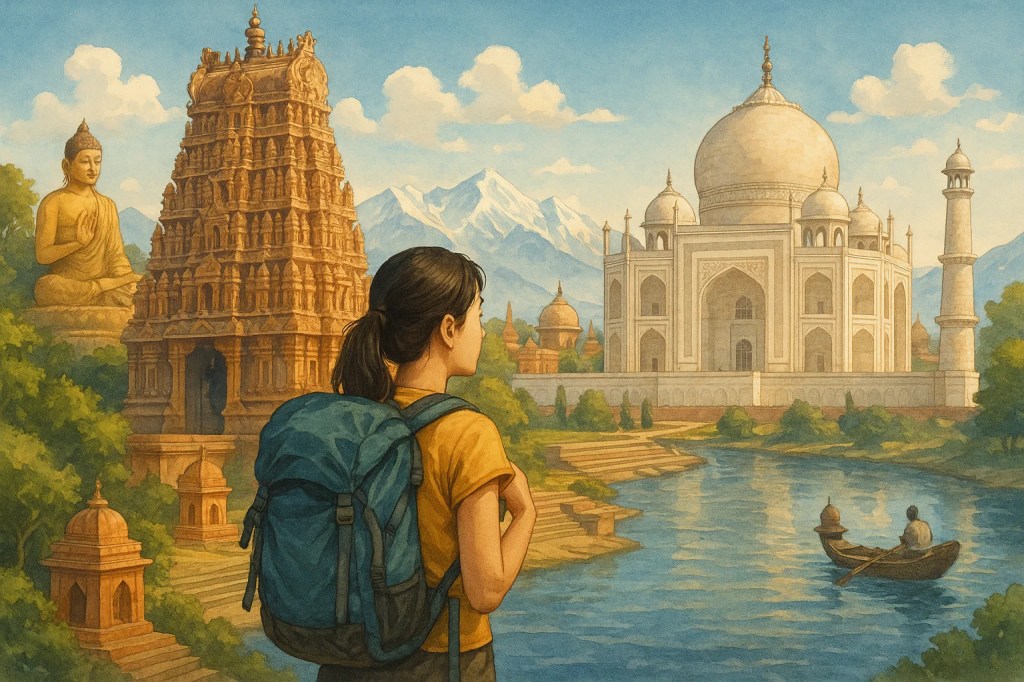
In 2017, I packed my bags and headed off to India—hoping to find inspiration, maybe even some answers. What I got was a roller-coaster of experiences that tested my body, challenged my mind, and opened my heart in ways I never expected.
This isn’t a typical travel blog post full of top 10 lists and photogenic food recommendations. This is a story of what really happened when I spent weeks weaving through India’s sprawling cities, sacred temples, remote villages, and the lower reaches of the Himalayas.
Culture Shock: A Crash Course in Contrasts
India hit me hard from day one. The cities—Delhi, Mumbai, Kolkata—are alive in a way that’s hard to describe unless you’ve been there. Crowds everywhere. Colors everywhere. Smells—good and bad—everywhere. But the real shock didn’t come from the chaos. It came from the contrast.
One moment, you’re walking past a luxury hotel or a high-end café. The next, you’re stepping around someone lying on the sidewalk—emaciated, clearly starving. I’ll never forget seeing a man like that in one of the most affluent parts of New Delhi. It was jarring, heartbreaking, and eye-opening.
India is a land of contradictions. Unimaginable wealth and unbearable poverty coexist, sometimes just meters apart. That’s the kind of reality check that sticks with you.
Spicy Food & Stomach Battles
Let’s talk food. Indian cuisine is incredible—rich, complex, and deeply regional. But also? Insanely spicy. I thought I liked spicy food before this trip. India laughed at me.
I quickly realized my stomach had its limits. After a few painful encounters with local dishes (and some regrettable bravado), I started eating just once a day and focused on drinking a ton of water. Over the course of the trip, I lost about 10 kilograms. It wasn’t intentional—it was just survival. The food is raw, unfiltered, and totally unapologetic. That’s part of what makes it unforgettable.
Risking It All (Including My Health)
Hygiene was another battle. In many areas, access to clean toilets and safe drinking water isn’t guaranteed. I had to be constantly alert—checking water sources, avoiding raw foods, using sanitizer like my life depended on it (because sometimes, it did).
Here’s a sobering reality:
- About 60% of India’s population has access to safely managed drinking water (World Bank, 2022).
- Over 190 million people are undernourished (Global Hunger Index, 2023).
- Sanitation remains a challenge, especially in rural and tribal areas.
The risks are real. But so are the lessons.
Sacred Spaces: Temples That Stopped Me in My Tracks
India’s temples are more than just places of worship—they’re masterpieces of history, architecture, and symbolism.
I visited temples in nearly every major city I passed through, each offering something unique. Towering stone structures carved with mythological stories. Quiet, incense-filled sanctuaries where people sat in deep meditation. Vibrant courtyards buzzing with rituals, chants, and offerings.
But one temple stood out for very different reasons—the Khajuraho Temple complex in Madhya Pradesh.
This UNESCO World Heritage site is famous for its erotic sculptures, which boldly depict scenes from the Kamasutra. It’s not what you expect to see on a sacred building, and yet, it all fits within India’s complex and layered cultural identity—one that celebrates not just spirituality, but also the body, human experience, and sensuality as part of the divine.
It was shocking at first—but also fascinating. It challenged my assumptions and made me realize how differently other cultures approach taboo topics like sexuality and intimacy.
Kasol and the Tribal Communities of the North
One of the most surreal and beautiful chapters of my journey took place in Kasol, a small village tucked deep in the Parvati Valley of Himachal Pradesh. Known among backpackers for its peaceful vibe and breathtaking scenery, Kasol was my gateway to something far deeper.
From there, I hiked into the mountains and visited a remote tribal community, where life still flows in harmony with nature and tradition. No internet, no clocks, no noise. Just mountains, silence, and people living by ancient rhythms. Being welcomed into their world was a grounding and unforgettable experience.
Malana: A Village Frozen in Time
From Kasol, I made my way to Malana, one of the most isolated and mysterious villages in India. Malana isn’t just remote—it’s different. The locals speak their own language (Kanashi), follow their own customs, and even believe they are descendants of Alexander the Great’s army.
Everything about Malana felt like stepping into another dimension. Visitors are welcome, but strictly forbidden from touching the locals or their property. The rules are rigid, the traditions are fiercely protected, and the village exists in a bubble of its own identity.
Despite the restrictions, my time there was eye-opening. The views were ethereal, and the sense of cultural preservation was unmatched. It was a powerful reminder of how many worlds exist within a single country—and how much we have to learn from those who live differently.
People: The Heart of India
If I had to sum up the best part of my trip in one word? People.
Everywhere I went, I met locals my age who were bright, kind, curious, and welcoming. Despite challenges many of them face—lack of access to education, housing, healthcare—they carry themselves with pride, humor, and hope.
They reminded me how powerful it is to be open, how far a smile and a shared story can go, and how human connection really is the most valuable currency we have.
Final Thoughts: Would I Do It Again?
Absolutely.
Traveling to India was messy, intense, uncomfortable, and at times, exhausting. But it was also one of the most real and transformative experiences of my life. It reminded me that the world is both beautiful and broken—and that maybe, we grow the most when we’re forced to sit with both of those truths at once.
So, if you’re thinking about going to India—go. But go with your eyes open, your stomach prepared, and your heart ready for a wild, beautiful ride.
 Quick-reads.io
Оставить комментарий