

Автор: Динара Касаинова

  • Fast Fashion’s Impact on Luxury Brands

    Fast Fashion’s Impact on Luxury Brands

    In today’s hyper-accelerated fashion world, trends come and go at breakneck speed. What used to take months to design, produce, and release can now be duplicated and shipped to consumers in a matter of days. This is the era of fast fashion—a juggernaut that has changed not just how we shop, but how we value fashion itself.

    But beneath the glossy appeal of cheap prices and constant newness lies a complex ripple effect—especially on high-end brands and the deeper culture of fashion. As fast fashion booms, luxury labels and traditional fashion institutions are being forced to adapt, pivot, or push back.

    Here’s how.

    The Copycat Economy: When High Fashion Gets Knocked Off in Weeks

    Once, luxury fashion houses had a degree of exclusivity that fast fashion couldn’t touch. Collections were guarded, meticulously crafted, and released on a slow, seasonal schedule. But now? A runway look might be replicated by a fast fashion brand and hit stores or websites within two weeks.

    The lines between original design and imitation have blurred. This has sparked lawsuits, creative frustration, and an ongoing debate: is fashion still about innovation—or just speed and visibility?

    For high-end designers who invest months of work into craftsmanship and storytelling, it’s disheartening to see their work diluted and sold for a fraction of the price. And for consumers, it raises a question of value: are we buying style, or just buying fast?

    Luxury Under Pressure: Eroding Exclusivity and the Rise of “Accessible” Glamour

    Luxury has always sold aspiration. But in the age of social media, exclusivity is harder to maintain. Fast fashion mimics the aesthetics of high-end brands so convincingly that the lines between “real” and “inspired” often vanish on a feed.

    This erosion of exclusivity pressures high-end brands to respond. Some are speeding up their production cycles. Others are experimenting with limited drops and collaborations to stay relevant in a hype-driven market.

    But the cost is cultural. When every brand feels the pressure to stay viral and visible, long-term design, heritage, and artistic risk often take a backseat to algorithms and influence.

    The Rise of Hype Culture

    Fuelled by the immediacy of social media, the proliferation of influencer marketing, and the voracious appetite for the «new,» hype culture thrives on scarcity and spectacle. Drops, collaborations, and viral campaigns have replaced the slow burn of seasonal collections. Streetwear labels like Supreme and Palace helped pioneer the drop model, which high fashion brands such as Gucci, Louis Vuitton, and Balenciaga have since co-opted to maintain cultural currency.

    In this new landscape, attention is the ultimate currency. Collections are designed for Instagram moments, not museum exhibitions. Trends now come and go in weeks, not years, and consumers chase the next hit of dopamine with every limited release.

    Heritage: Lost in the Noise?

    Heritage brands like Chanel, Hermès, and Dior built their reputations on craftsmanship, storytelling, and legacy. Their identities were once safeguarded by creative directors who acted as stewards of tradition. But in the modern era, many of these houses have pivoted to cater to younger audiences hungry for novelty, often sacrificing depth for mass appeal.

    This isn’t merely about change—fashion is, by nature, ever-evolving. It’s about speed. What used to be an evolution of ideas has become an acceleration. Heritage, which requires context and contemplation, struggles to compete with the immediacy of meme fashion and TikTok trends.

    The Rebellion: Sustainability, Slow Fashion, and a Cultural Shift

    Not everyone is on board with the fast fashion frenzy. A growing segment of fashion-conscious consumers is rejecting disposability in favor of sustainability and ethical production. They want to know who made their clothes, what they’re made of, and how long they’ll last.

    This has given rise to a counterculture movement within modern fashion: slow fashion, upcycling, capsule wardrobes, and a renewed appreciation for vintage and artisan-made pieces.

    Interestingly, high-end fashion is finding a new niche here. Some luxury brands are leaning into their heritage and craftsmanship, repositioning themselves as the antidote to fast fashion’s waste and repetition.

    A Call for Reflection

    As fashion hurtles forward, it’s time for the industry to pause and reflect. What does it want to be? A mirror of fleeting internet culture, or a maker of enduring beauty and meaning?

    Consumers, too, hold power. By valuing quality over quantity, substance over spectacle, they can influence the direction of fashion. The future doesn’t have to be a choice between hype and heritage—it can be a harmony of both.

  • If You Don’t Count Your Money, Someone Else Will: Best Ways to Budget Your Cash

    If You Don’t Count Your Money, Someone Else Will: Best Ways to Budget Your Cash

    Let’s be real—money doesn’t just disappear. It quietly slips away when you’re not paying attention. If you’re not the one deciding where it goes, something (or someone) else is. And they’re probably not saving it for your goals.

    Here’s the thing: budgeting isn’t about being frugal or boring. It’s about being intentional. It’s how you go from wondering where your money went to telling it exactly what to do. And yes, even the smallest choices matter—because every penny counts. What seems like spare change today could be the difference-maker in the long run.

    Whether you’re dreaming of owning something you’ve wanted since you were a kid, getting out of debt, or just feeling more in control, here’s how to take charge of your cash—without sacrificing the life you love.

    Pick a Budgeting Style That Actually Works for You

    There’s no one right way to budget. The best method is the one you’ll actually use:

    • 50/30/20 Rule – A straightforward split: 50% to needs, 30% to wants, 20% to savings or debt.
    • Zero-Based Budgeting – Give every dollar a job. Every. Single. One.
    • Envelope System – A hands-on way to stay accountable, whether it’s physical envelopes or a digital version.

    Experiment until you find your flow—and stick with it. This isn’t about perfection; it’s about progress.

    Track Every Dollar—Because Every Dollar Matters

    It might not seem like a big deal to spend $5 here or $8 there, but it adds up faster than you think. Those little leaks? They’re why your budget’s sinking.

    Use a budgeting app or a spreadsheet, but whatever you do—track your spending. When you know where your money is going, you can start telling it where to go instead.

    Automate the Essentials and Free Up Mental Space

    Make it easy to stay on track. Automate your bill payments. Set up recurring transfers to savings. These small moves take the pressure off and make sure your money is doing the right thing—even when life gets busy.

    Cut the Waste, Keep What Matters

    You don’t need to eliminate joy. Just be intentional about where your money goes. Look at your expenses with fresh eyes. Is there anything you’re paying for that you don’t use or value? Cut it.

    What you save from trimming the unnecessary might seem small—but in the long run, it adds up to real money you can put toward goals that actually matter to you.

    Budgeting = Freedom to Say Yes to Big Dreams

    That one thing you’ve wanted for years? The dream item from your childhood? It doesn’t have to stay on the wishlist forever. When you track your spending and stay disciplined, you can say yes—without guilt or financial stress.

    Saving intentionally means you’re not just working to survive. You’re building toward the things that make life exciting.

    Check In Monthly—Adjust, Learn, Keep Going

    Your budget isn’t set in stone. Life changes, and your finances should flex with it. Take time at the end of each month to review how things went. Where did you do well? What surprised you? Where can you improve?

    This reflection is where real growth happens.

    Make Room for Fun—On Purpose

    Budgeting doesn’t mean cutting out fun—it means planning for it. Carve out money for things that make you smile, whether it’s weekend adventures, new hobbies, or occasional splurges. Life’s better when you’re not depriving yourself—you’re just being smart about what really counts.

    Final Thoughts: Every Penny Counts, and So Do You

    The truth is simple: small choices today build the future you want tomorrow. It might not feel like skipping one coffee, canceling one subscription, or tracking one $10 expense will change your life—but it will. Because every time you count your money, you’re choosing intention over impulse.

    And if you don’t count your money, someone else will. Retailers, subscriptions, unnecessary fees—they’re all happy to take it off your hands.

    Budgeting puts you in control. It gives you power. It helps you build a life you’re proud of—one dollar, one decision, one step at a time.

  • Wandering Through India: A Personal Odyssey of Fire, Faith, and Humanity

    Wandering Through India: A Personal Odyssey of Fire, Faith, and Humanity

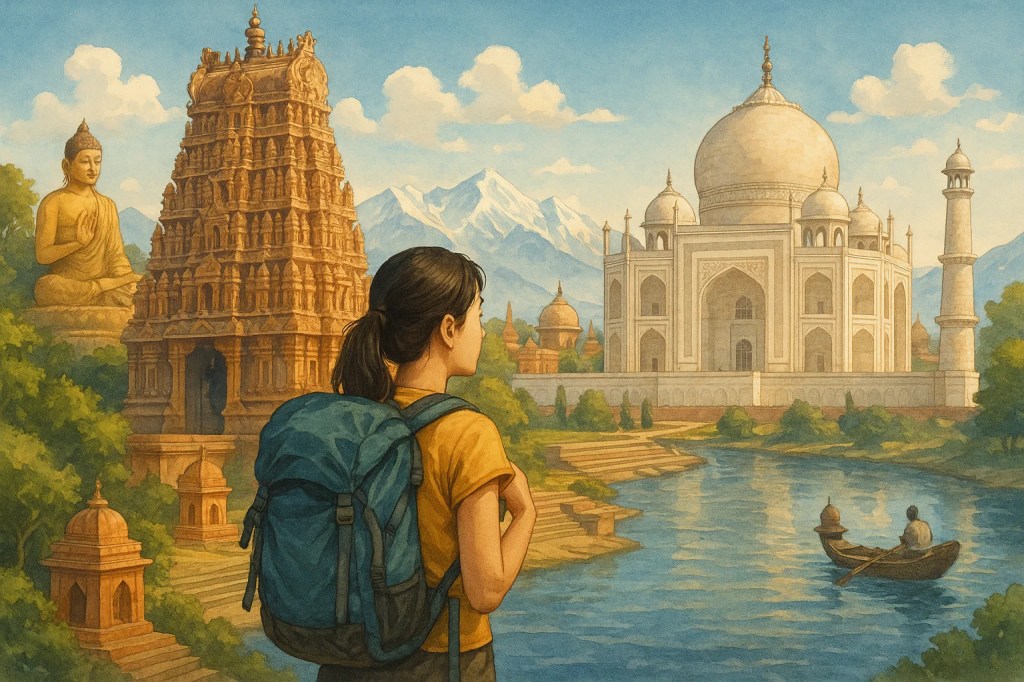
    In 2017, I packed my bags and headed off to India—hoping to find inspiration, maybe even some answers. What I got was a roller-coaster of experiences that tested my body, challenged my mind, and opened my heart in ways I never expected.

    This isn’t a typical travel blog post full of top 10 lists and photogenic food recommendations. This is a story of what really happened when I spent weeks weaving through India’s sprawling cities, sacred temples, remote villages, and the lower reaches of the Himalayas.

    Culture Shock: A Crash Course in Contrasts

    India hit me hard from day one. The cities—Delhi, Mumbai, Kolkata—are alive in a way that’s hard to describe unless you’ve been there. Crowds everywhere. Colors everywhere. Smells—good and bad—everywhere. But the real shock didn’t come from the chaos. It came from the contrast.

    One moment, you’re walking past a luxury hotel or a high-end café. The next, you’re stepping around someone lying on the sidewalk—emaciated, clearly starving. I’ll never forget seeing a man like that in one of the most affluent parts of New Delhi. It was jarring, heartbreaking, and eye-opening.

    India is a land of contradictions. Unimaginable wealth and unbearable poverty coexist, sometimes just meters apart. That’s the kind of reality check that sticks with you.

    Spicy Food & Stomach Battles

    Let’s talk food. Indian cuisine is incredible—rich, complex, and deeply regional. But also? Insanely spicy. I thought I liked spicy food before this trip. India laughed at me.

    I quickly realized my stomach had its limits. After a few painful encounters with local dishes (and some regrettable bravado), I started eating just once a day and focused on drinking a ton of water. Over the course of the trip, I lost about 10 kilograms. It wasn’t intentional—it was just survival. The food is raw, unfiltered, and totally unapologetic. That’s part of what makes it unforgettable.

    Risking It All (Including My Health)

    Hygiene was another battle. In many areas, access to clean toilets and safe drinking water isn’t guaranteed. I had to be constantly alert—checking water sources, avoiding raw foods, using sanitizer like my life depended on it (because sometimes, it did).

    Here’s a sobering reality:

    • About 60% of India’s population has access to safely managed drinking water (World Bank, 2022).
    • Over 190 million people are undernourished (Global Hunger Index, 2023).
    • Sanitation remains a challenge, especially in rural and tribal areas.

    The risks are real. But so are the lessons.

    Sacred Spaces: Temples That Stopped Me in My Tracks

    India’s temples are more than just places of worship—they’re masterpieces of history, architecture, and symbolism.

    I visited temples in nearly every major city I passed through, each offering something unique. Towering stone structures carved with mythological stories. Quiet, incense-filled sanctuaries where people sat in deep meditation. Vibrant courtyards buzzing with rituals, chants, and offerings.

    But one temple stood out for very different reasons—the Khajuraho Temple complex in Madhya Pradesh.

    This UNESCO World Heritage site is famous for its erotic sculptures, which boldly depict scenes from the Kamasutra. It’s not what you expect to see on a sacred building, and yet, it all fits within India’s complex and layered cultural identity—one that celebrates not just spirituality, but also the body, human experience, and sensuality as part of the divine.

    It was shocking at first—but also fascinating. It challenged my assumptions and made me realize how differently other cultures approach taboo topics like sexuality and intimacy.

    Kasol and the Tribal Communities of the North

    One of the most surreal and beautiful chapters of my journey took place in Kasol, a small village tucked deep in the Parvati Valley of Himachal Pradesh. Known among backpackers for its peaceful vibe and breathtaking scenery, Kasol was my gateway to something far deeper.

    From there, I hiked into the mountains and visited a remote tribal community, where life still flows in harmony with nature and tradition. No internet, no clocks, no noise. Just mountains, silence, and people living by ancient rhythms. Being welcomed into their world was a grounding and unforgettable experience.

    Malana: A Village Frozen in Time

    From Kasol, I made my way to Malana, one of the most isolated and mysterious villages in India. Malana isn’t just remote—it’s different. The locals speak their own language (Kanashi), follow their own customs, and even believe they are descendants of Alexander the Great’s army.

    Everything about Malana felt like stepping into another dimension. Visitors are welcome, but strictly forbidden from touching the locals or their property. The rules are rigid, the traditions are fiercely protected, and the village exists in a bubble of its own identity.

    Despite the restrictions, my time there was eye-opening. The views were ethereal, and the sense of cultural preservation was unmatched. It was a powerful reminder of how many worlds exist within a single country—and how much we have to learn from those who live differently.

    People: The Heart of India

    If I had to sum up the best part of my trip in one word? People.

    Everywhere I went, I met locals my age who were bright, kind, curious, and welcoming. Despite challenges many of them face—lack of access to education, housing, healthcare—they carry themselves with pride, humor, and hope.

    They reminded me how powerful it is to be open, how far a smile and a shared story can go, and how human connection really is the most valuable currency we have.

    Final Thoughts: Would I Do It Again?

    Absolutely.

    Traveling to India was messy, intense, uncomfortable, and at times, exhausting. But it was also one of the most real and transformative experiences of my life. It reminded me that the world is both beautiful and broken—and that maybe, we grow the most when we’re forced to sit with both of those truths at once.

    So, if you’re thinking about going to India—go. But go with your eyes open, your stomach prepared, and your heart ready for a wild, beautiful ride.